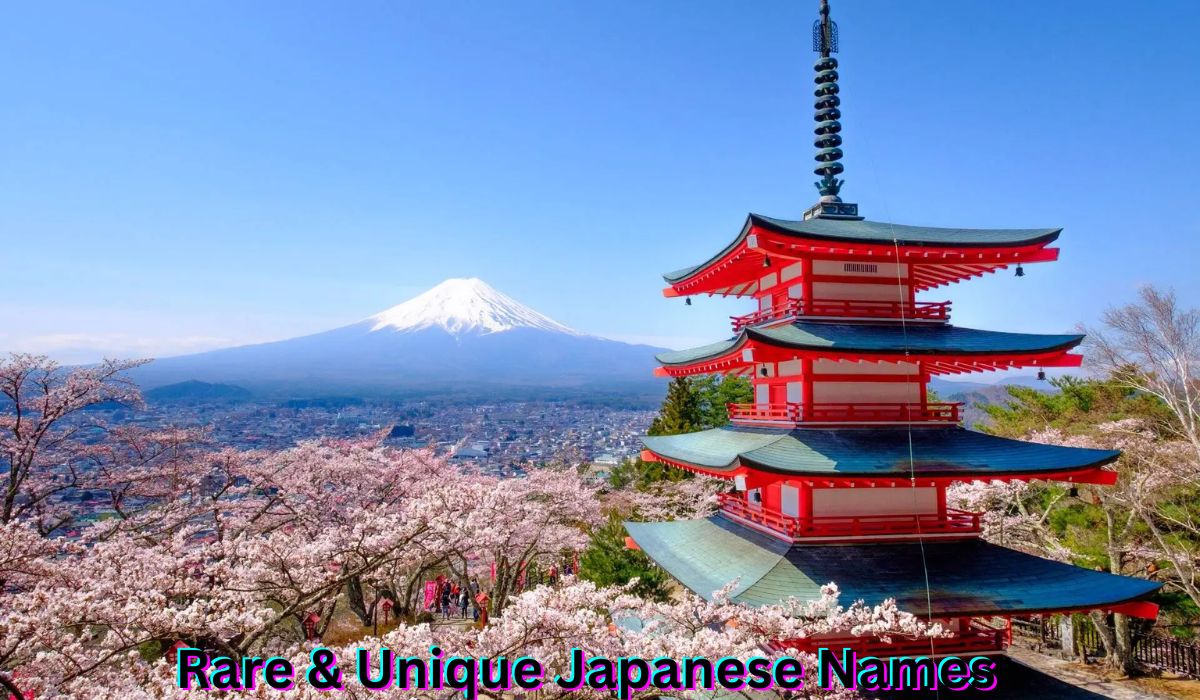
Choosing a name for your little one is one of the most exciting parts of becoming a parent, and Japanese names bring a special blend of beauty, meaning, and tradition to the table. Each name tells a small story, whether it’s tied to nature, virtue, or hope for the future.
If you’re drawn to names that feel fresh and uncommon rather than trendy, this list is for you. We’ve gathered a wide mix of rare boy names, girl names, surnames, and unisex options, each with its meaning explained so you can pick the one that truly fits your family.
Unique Japanese Boy Names

Japanese boy names often carry themes of strength, light, nature, and honor, making them a wonderful choice for parents who want something meaningful yet distinctive for their son.
- Aoto – Blue Wisteria
- Itsuki – Tree
- Kaien – New Beginning
- Kaiya – Peaceful Design
- Rikuya – Land Night
- Tsubasa – Wing
- Aokirō – Bright Hero
- Yuto – Gentle Person
- Hiroto – Broad Soar
- Naoji – Honest Second Son
- Akito – Bright Person
- Minoru – Truthful Achievement
- Raito – Light Flight
- Rion – Strong
- Reiji – Well-Ordered Second Son
- Takeru – Strong
- Ryota – Refreshing Great
- Akihiro – Bright Broad
- Renzo – Lotus
- Hideo – Hero, Outstanding
- Renjiro – Lotus Son
- Akiya – Autumn Night
- Hiroshi – Generous
- Kazuki – Harmonious Hope
- Ryusei – Flowing Star
- Kota – Shining Peace
- Shohei – Peaceful Flight
- Ryuto – Dragon Wisteria
- Shoma – Bright Truth
- Fumio – Scholarly Man
- Naoki – Honest Tree
- Isamu – Courage
- Makoto – Truthful
- Tetsuya – Iron, Glowing
- Eiji – Prosperous, Eternal
- Junpei – Pure Peace
- Rento – Lotus Soaring
- Arata – Fresh, New
- Tomoya – Friendly Valley
- Yuuto – Gentle, Superiority
- Kenta – Healthy Big
Rare and Unique Female Japanese Names

Girl names in Japan tend to lean toward floral, graceful, and gentle meanings, blending soft sounds with imagery drawn straight from nature and everyday beauty.
- Arisawa – Valley of Antlers
- Hinano – Sunflower Child
- Meika – Bud of Beauty
- Reiko – Grateful Child
- Emiri – Blessed Village
- Hiyono – Daylight Field
- Kaori – Fragrance
- Nanoka – Seventh Flower
- Rinka – Cold Flower
- Suzuha – Bell Leaf
- Kaizuka – Prosperity Peninsula
- Mizuna – Fresh Water Greens
- Kohana – Little Flower
- Airin – Love Bell
- Yukina – Snowy Greens
- Kaede – Maple Leaf
- Sena – Fresh Flow
- Chikako – Child of Wisdom
- Reina – Wise Beauty
- Natsume – Summer Plum
- Hinari – Sun Jewel
- Ririka – Lovely Aroma
- Aihara – Love Field
- Nozomi – Rare Hope
- Ichika – One Flower
- Suzuna – Bell Harmony
- Ayaka – Colorful Fragrance
- Yuna – Kindness Blossom
- Akiha – Autumn Leaf
- Haruna – Spring Vegetation
- Minori – Harvest
- Sayaka – Clear and Bright
- Tsubaki – Camellia
- Ayame – Iris Flower
- Himari – Sunlight Village
- Misaki – Beautiful Cape
- Akari – Bright Light
- Chihiro – Thousand Questions
- Fuyuko – Winter Child
- Satsuki – May Blossom
Rare Japanese Last Names

Japanese surnames often reflect geography, nature, or ancestral villages, and picking a rarer one can give a name an elegant, storied feel that pairs beautifully with any first name.
- Harukawa – Spring River
- Takamura – High Village
- Shimizu – Pure Water
- Fujikawa – Wisteria River
- Yamashita – Base of the Mountain
- Akasaka – Red Hill
- Kurosawa – Black Rapids
- Matsuda – Pine Field
- Hoshiyama – Star Mountain
- Takeuchi – Bamboo Pond
- Chikamatsu – Close Pine
- Nakamura – Central Village
- Kurogawa – Black River
- Yanagida – Willow Field
- Kirishima – Fog Island
- Takahashi – Tall Bridge
- Ishikawa – Stone River
- Fujimoto – Base of Wisteria
- Nishioka – West Hill
- Kobayashi – Small Forest
- Tsukimura – Moon Village
- Hayakawa – Fast River
- Morikawa – Forest River
- Aoyama – Blue Mountain
- Tanigawa – Valley River
- Kawabata – Riverside
- Shiraishi – White Stone
- Yamaguchi – Mountain Entrance
- Miyazaki – Shrine Peninsula
- Nakagawa – Middle River
- Otsuka – Large Mound
- Sakurai – Cherry Blossom Well
- Fukuyama – Fortunate Mountain
- Takano – High Field
- Uchida – Inner Rice Field
- Ogawa – Small River
- Hasegawa – Long Valley River
- Kimura – Tree Village
- Ishihara – Stone Meadow
- Nishimura – West Village
Unique Unisex Japanese Names
Some Japanese names work beautifully for any gender, often built around soft, open meanings like sky, hope, or light that don’t lean strongly masculine or feminine.
- Hikari – Light
- Sora – Sky
- Ren – Lotus
- Yui – Bind, Gentle
- Haru – Spring
- Kai – Ocean
- Aki – Autumn, Bright
- Rin – Dignified
- Yu – Gentle
- Tsukasa – Officer, Leader
- Asahi – Morning Sun
- Michi – Path
- Kaoru – Fragrance
- Tomo – Friend
- Yoru – Night
- Nagi – Calm
- Riku – Land
- Hoshi – Star
- Nozomu – Hope
- Izumi – Spring, Fountain
- Kagaya – Shining
- Chika – Near, Wisdom
- Wataru – To Cross
- Midori – Green
- Sui – Water
- Shion – Aster Flower
- Fuyu – Winter
- Natsu – Summer
- Ao – Blue
- Kou – Light, Filial
- Ran – Orchid
- Ryo – Refreshing
- Hina – Sun, Doll
- Sana – Sand, Aid
- Yamato – Great Harmony
- Koto – Harp, Word
- Airi – Love Village
- Tama – Jewel
- Kanon – Flower Sound
- Umi – Ocean
Read Also This: 800+ Adorable Cow Names (Don’t Name Your Cow Until You Read This)
Things You Must Know About Rare or Unique Japanese Names

Before settling on a rare Japanese name, it helps to understand kanji variations, pronunciation quirks, and cultural meaning, since the same sound can carry very different written meanings.
Many rare names change meaning based on which kanji characters are used, so even a common-sounding name can feel unique depending on the characters chosen for it. It’s worth checking pronunciation and cultural context, especially if the name will be used outside Japan, to avoid unintended meanings or awkward mispronunciations down the road.
Rare Japanese names often come from nature, seasons, or virtues rather than trends, giving them a timeless quality. Working with a native speaker or reliable resource when finalizing kanji ensures the name reads correctly and carries the meaning you actually intended for your child.
Frequently Asked Questions
What are some uncommon Japanese names?
Many parents choose Rare & Unique Japanese Names for originality and charm.
Which names have special meanings?
Names with meanings tied to hope, nature, or light are popular. Rare & Unique Japanese Names can carry beautiful symbolism.
Are there unique names for girls?
Parents often look for elegant and meaningful choices for daughters. Rare & Unique Japanese Names offer many lovely girl name ideas.
Are there distinctive names for boys?
Strong and creative choices appeal to many modern families. Rare & Unique Japanese Names include many bold boy name options.
Can nature inspire these names?
Flowers, seasons, rivers, and stars inspire many naming ideas. Rare & Unique Japanese Names frequently reflect natural beauty.
How can I pick the right one?
Consider pronunciation, meaning, and how the name feels daily. Rare & Unique Japanese Names should match your personal style.
Are these names popular today?
Many uncommon names are gaining attention among new parents. Rare & Unique Japanese Names remain stylish while feeling distinctive.
Final Thought
Picking a rare Japanese name is a wonderful way to give your child something meaningful, beautiful, and distinctly their own. Whether you’re drawn to nature-inspired girl names, strong boy names, elegant surnames, or flexible unisex picks, there’s a name here that captures the feeling you’re going for.
Take your time exploring the meanings and pronunciations before deciding, since a name is something your child will carry for life. Whichever one you choose, it’s sure to be a name filled with character, culture, and heart.