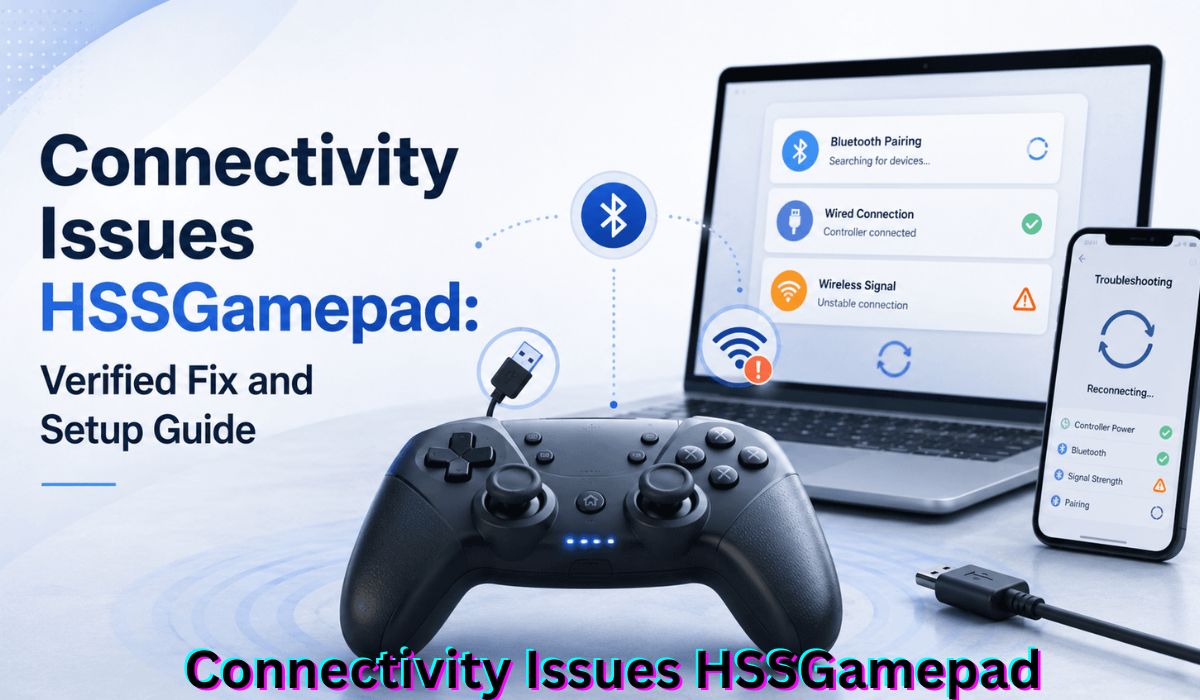
Nothing kills a gaming session faster than a controller that won’t cooperate. If you’re battling HSSGamepad connectivity issue headaches right now, you’re not alone. Thousands of gamers hit the same wall every week, usually right before a big match or boss fight.
The good news is that most HSSGamepad connection problems come from small, fixable things rather than broken parts. This guide covers every common scenario step by step, so you can stop guessing and start playing again in minutes, not hours.
What Is the HSSGamepad?

The HSSGamepad is a multi-platform controller designed for gamers who want flexibility without paying premium prices. It works across PC, mobile, Smart TVs, and cloud gaming platforms like Xbox Cloud Gaming and GeForce NOW, making it a genuinely versatile pick for varied setups.
That flexibility is exactly why HSSGamepad troubleshooting questions pop up often. Three connection modes mean three different failure points. Understanding each mode is the real starting point for fixing any HSSGamepad connectivity issue you’re facing today.
| Connection Mode | Function | Best Use |
| Bluetooth | Wireless pairing | Phones, tablets |
| 2.4GHz Dongle | USB receiver | PC gaming |
| USB Wired | Direct cable | Zero interference |
Quick Diagnosis – Find Your Problem Fast

Before diving into random fixes, match your symptom to its likely cause first. This simple step saves serious time and steers you straight to the right section instead of testing solutions blindly across multiple guides.
Most HSSGamepad controller issues reported across gaming forums fall into a handful of repeat categories. Use the quick table below to narrow things down before you touch a single setting.
| Symptom | Cause |
| Won’t appear in Bluetooth list | Not in pairing mode |
| Connects but no input | Wrong D-Input/X-Input mode |
| Random disconnects | Battery or interference |
| USB not recognized | Driver issue |
Understanding HSSGamepad Connectivity Issues

Every button press sends a signal that must land on your device within milliseconds. When that chain breaks, you feel it instantly through lag, sudden drops, or a controller that just stops responding mid-game.
Most HSSGamepad controller issues trace back to a short list: low battery, wireless interference, driver mismatches, wrong input mode, or Bluetooth pairing issues caused by nearby device congestion. Android’s battery saver settings are an overlooked culprit too.
- Weak or draining battery
- Crowded wireless environment
- Incorrect input mode selected
- Outdated or conflicting drivers
- Background battery-saving features
Fixing Bluetooth Pairing Issues
Bluetooth connection problems make up a huge share of Connectivity Issues HSSGamepad complaints. The fix is usually simpler than expected, but it does depend on following the exact pairing sequence correctly, in order.
One Reddit gaming community member summed it up well: they assumed their controller was broken, when really they just weren’t holding the button long enough. That single detail trips up more players than you’d expect.
Step 1 – Put the Gamepad in Pairing Mode (The Right Way)
Hold the Bluetooth button for 3–5 seconds until the LED flashes rapidly, confirming true pairing mode. A fast blink means it’s actively searching, and you’ll have roughly 60 seconds to complete the controller pairing before it times out.
Step 2 – Pair It on Your Device
- Android: Settings → Connected Devices → Pair New Device
- iOS: Bluetooth settings → tap gamepad under Other Devices
- Windows: Settings → Bluetooth & Devices → Add Device
This covers Windows 10 controller setup and Windows 11 controller setup in one simple sweep.
Step 3 – Still Not Showing Up? Try These Fixes
Forget the old Bluetooth device entry and re-pair fresh. Restart your Bluetooth stack to clear cached data. Confirm your device supports Bluetooth 4.0 or higher, and stay within three feet during the first attempt for reliable wireless pairing.
Fixing USB Connection Issues (PC)
A wired setup should be the most dependable option, yet USB device not recognized errors still happen. Most of these point to software conflicts rather than genuine hardware failure, so don’t panic and assume the worst right away.
Fixing this usually runs through Device Manager, where Windows controls driver installation. Once you know the routine, solving HSSGamepad USB connection errors becomes a quick five-minute task instead of a frustrating guessing game.
Common USB Problems and Fixes
- Open Device Manager, look for a yellow warning icon
- Uninstall the device and its driver
- Reconnect so Windows reinstalls it automatically
- Still glitching in-game? It’s likely a D-Input vs X-Input conflict, not a USB troubleshooting issue at all.
Fixing 2.4GHz Wireless Dongle Issues
The HSSGamepad wireless dongle is often mistaken as missing when it’s actually tucked inside the controller’s battery compartment. That one misunderstanding alone causes countless unnecessary support tickets and unneeded replacement purchases every single year.
Once located, dongle setup takes under a minute. It ships pre-paired from the factory, meaning there’s no manual Bluetooth process required for this particular HSSGamepad wireless connection method at all.
Setting Up the Dongle Correctly
Plug the USB receiver straight into your PC, never through a USB hub. Switch the mode selector to 2.4GHz, power on, and it connects instantly. Confirm it under Devices and Printers in your Control Panel.
2.4GHz Dongle Not Working?
Double-check the mode switch isn’t accidentally left on Bluetooth. Try a different USB port if nothing happens. Keep routers away from the dongle, since Wi-Fi and 2.4GHz share the same frequency band, causing dongle troubleshooting headaches.
D-Input vs X-Input – The Hidden Problem Nobody Talks About
This is easily the most overlooked cause behind controller recognition failures inside actual games. Your gamepad may connect just fine yet still ignore button presses because of a mismatched input standard running underneath.
X-Input is the modern standard most PC titles use, while DirectInput mode serves older games and emulators. Check your current mode via joy.cpl through the Windows Run dialog, then switch using your controller’s dedicated mode combination.
Fixing Wireless Disconnection Problems
If your gamepad keeps dropping, the cause almost always falls into one of four buckets. Working through them in order, rather than guessing randomly, saves real time and gets you back into competitive matches faster.
- Battery running low
- Android battery optimization interference
- Wireless or Wi-Fi interference
- Corrupted Bluetooth pairing data
Let’s break each one down individually below, starting with the most common cause across both PC and mobile setups worldwide.
1. Check Your Battery Level First
A weakening battery causes intermittent controller disconnects long before it fully dies. This remains the most common cause of dropouts. Always charge or swap batteries first before blaming wireless interference or software glitches instead.
2. Android Battery Optimization (Commonly Missed)
Android battery optimization aggressively kills background Bluetooth processes to save power. Go to Settings → Apps → Bluetooth MIDI Service, then set battery usage to Unrestricted. This single tweak fixes most HSSGamepad connectivity issue reports from Android users.
3. Reduce Wireless Interference
Wi-Fi interference from routers, microwaves, and nearby Bluetooth gear disrupts your wireless signal constantly. Switch your router to the 5GHz band where possible, and keep the gamepad within line of sight for stronger signal strength.
4. Re-Pair the Connection Fresh
Corrupted pairing data sometimes causes stubborn dropouts that nothing else resolves. Forget the Bluetooth device entirely, power cycle both ends, then repeat the re-pairing process from scratch to clear any lingering connection errors for good.
Fixing Input Lag
Input lag frustrates competitive gamers more than anything else. That gap between a button press and the on-screen result can cost matches, especially in fast, reaction-heavy genres where every millisecond of controller latency genuinely matters.
Switching to USB wired connection mode eliminates wireless delay completely. The 2.4GHz dongle also beats Bluetooth for low latency gaming in most real setups, and enabling Game Mode Windows 11 trims controller performance delays further.
Platform-Specific Troubleshooting
Every platform handles the HSSGamepad setup guide requirements a little differently. Knowing your device’s specific quirks saves wasted troubleshooting time and sends you straight to a working fix instead of guessing through generic advice.
| Platform | Key Requirement |
| Windows | Update drivers, test via joy.cpl |
| Android | Android 8.0+, per-app controller support |
| iOS | MFi framework, iOS 13+ |
| Smart TV | Varies heavily by brand |
Windows 10 / 11
Test the controller using joy.cpl, then confirm buttons register inside the calibration tool. Update Windows drivers through Device Manager if needed, and temporarily disable Xbox accessory software if it conflicts with your HSSGamepad controller fix.
Android
Android game controller support works best on Android 8.0 or newer. If sticks feel unresponsive, confirm the specific game actually enables controller input in its own settings, since not every app supports external hardware.
iOS
iPhone game controller and iPad controller support rely on Apple’s MFi controller support framework. Update to iOS 13 or later for reliability, and always confirm your specific game supports external controllers before assuming failure.
Smart TV
Smart TV game controller support varies a lot by brand. Samsung Tizen and LG WebOS generally offer smoother compatibility than many Android TV builds. Check settings for a dedicated external controller or gamepad option first.
Updating HSSGamepad Firmware and Drivers
Outdated firmware causes erratic behavior even when the connection looks stable otherwise. An HSSGamepad firmware update often resolves quirks that basic troubleshooting steps genuinely cannot touch, no matter how many times you retry pairing.
Always connect via USB before running any update, never wirelessly. For Windows drivers, Windows Update handles most HID-compliant game controller installs automatically, though manual driver installation through Device Manager works as a solid backup.
Preventive Tips: Stop Connectivity Issues Before They Start
Prevention beats troubleshooting every time. A few consistent habits dramatically cut down how often you’ll run into Connectivity Issues HSSGamepad problems again, protecting both your gaming session time and your patience long term.
- Charge before every session, never below 20%
- Store the wireless dongle inside the battery compartment
- Pair to one device at a time
- Check firmware updates quarterly
- Use a quality USB-C cable or Micro USB cable
- Clear old Bluetooth pairings regularly
Read Also This: The Flying Elephant Memoirs of an Olympic Champion: Everything You Need to Know
When to Consider a Hardware Issue

If every fix above fails, genuine hardware failure might be the culprit. This is rare, but it’s worth ruling out before assuming your HSSGamepad compatibility with a specific device is permanently broken beyond any repair.
- Test with a different connection type first
- Bluetooth fails, USB works → possible Bluetooth module failure
- Inspect ports, buttons, and cables for physical damage
- Contact support only after ruling these out
Frequently Asked Questions
Why is my game controller not connecting?
If your controller fails to connect, check Bluetooth settings and battery level. Many users fix Connectivity Issues HSSGamepad by reconnecting the device properly.
Why does my controller keep disconnecting?
Frequent disconnections often happen because of weak wireless signals nearby. Restarting devices can reduce Connectivity Issues HSSGamepad and improve stability.
How can I fix pairing problems?
Remove the controller from paired devices and pair it again. This simple step often resolves Connectivity Issues HSSGamepad without additional tools.
Why is my controller not detected by my PC?
Outdated drivers may stop your computer from recognizing the controller. Updating software can solve Connectivity Issues HSSGamepad and restore functionality.
What should I do if Bluetooth is not working?
Turn Bluetooth off, wait a few seconds, then enable it. This method frequently helps eliminate Connectivity Issues HSSGamepad on different devices.
Can low battery cause connection problems?
Yes, a weak battery can interrupt communication with your system. Charging fully may prevent Connectivity Issues HSSGamepad during long gaming sessions.
How do I improve controller connection performance?
Keep the controller close to the device and remove interference. These adjustments can minimize Connectivity Issues HSSGamepad and ensure smoother gameplay.
Final Thought
Most Connectivity Issues HSSGamepad problems really do come down to small, everyday things: a low battery, the wrong input mode, or a stale pairing that just needs refreshing. Working through the diagnosis table first saves you from chasing the wrong fix entirely.
Whether you’re on PC gaming, mobile gaming, or Smart TV gaming, the same core principles apply: keep firmware current, manage interference, and know your connection modes. With this troubleshooting guide in hand, most HSSGamepad controller issues are solvable in minutes, not hours.